
Selling Over the Holidays in the Treasure Valley: 7 Myths vs What the MLS Data Shows
What October's closings and this week's listings actually say about selling between now and New Year's.

Every fall I hear some version of the same thing: "We'll just wait until spring. Nobody buys over the holidays." I get it. It's a busy time of year, and listing a home in December sounds like one more thing on the pile.
But a lot of what people believe about holiday selling comes from habit, not numbers. So I pulled real MLS data for Ada and Canyon counties: every single-family closing in October 2026, plus a snapshot of what's active and pending as of November 12. Here are seven myths I hear a lot, and what the data shows.
- 01Myth: Nobody buys once the holidays start
- 02Myth: You'll have to give your home away
- 03Myth: Homes just sit all winter
- 04Myth: Price it high, you can always come down later
- 05Myth: There are homes for sale everywhere right now
- 06Myth: The whole valley moves at the same speed
- 07Myth: Spring is always the smarter time to sell
1. Myth: Nobody buys once the holidays start
Buyers don't disappear when the weather turns. In October, 1,157 single-family homes closed in Ada and Canyon counties. As of November 12, another 676 were pending or under contract with contingencies, which means those buyers are working toward closing right through Thanksgiving and into December.
Most of October's closings went under contract in September or October (73.2%). These are buyers who were out writing offers in the fall, not back in the spring. And about one in five October sales (20.8%) closed with cash.
The people shopping this time of year usually have a reason to. A job start, a lease ending, a move they've already planned. That tends to make for focused buyers, not just browsers.
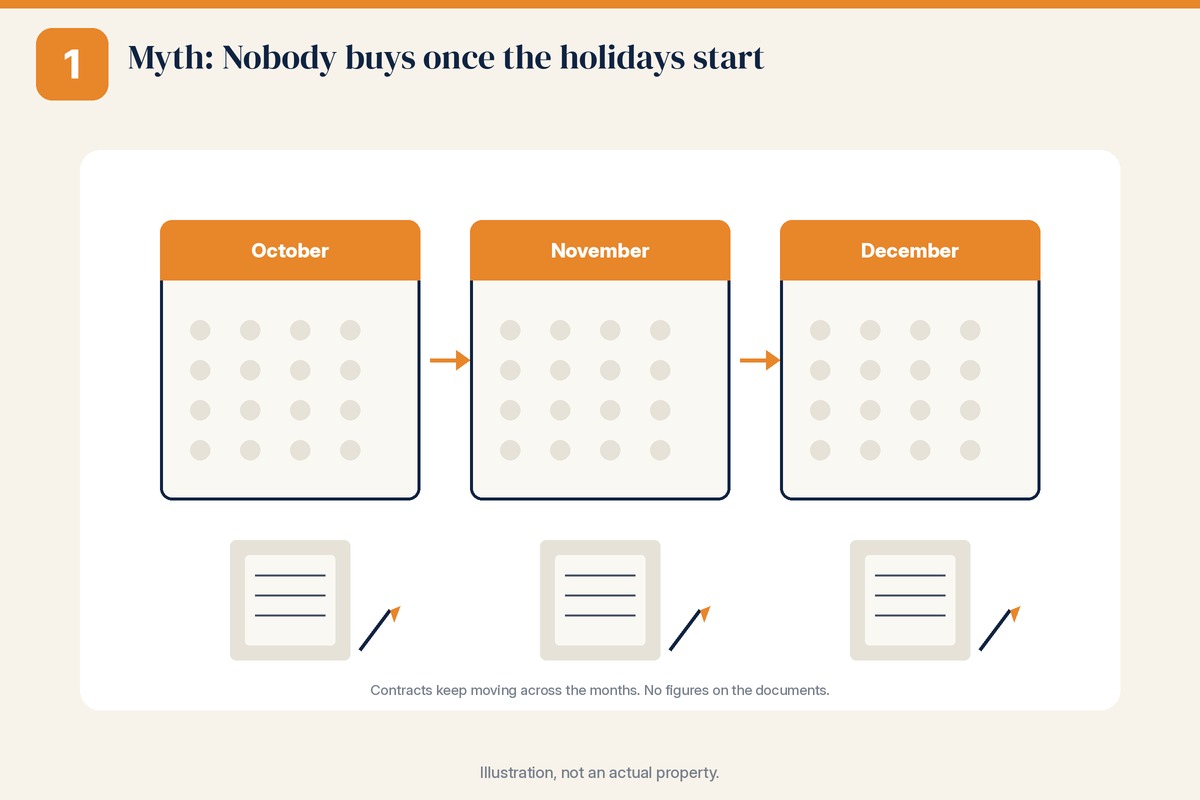
676 homes were in the pending pipeline on November 12. The holiday market is slower in some ways, but it isn't empty.
2. Myth: You'll have to give your home away
This one keeps a lot of homeowners on the sidelines. The data doesn't back it up. October's median sold-to-original-list price was 98.9%. In plain terms, the typical home sold for about a penny on the dollar less than its first list price.
Here's the part I'd pay attention to, though. A little more than half of October sales (56.5%) closed below their original list price, and 43.5% closed at or above it. So buyers are negotiating. They just aren't getting homes for a steal.
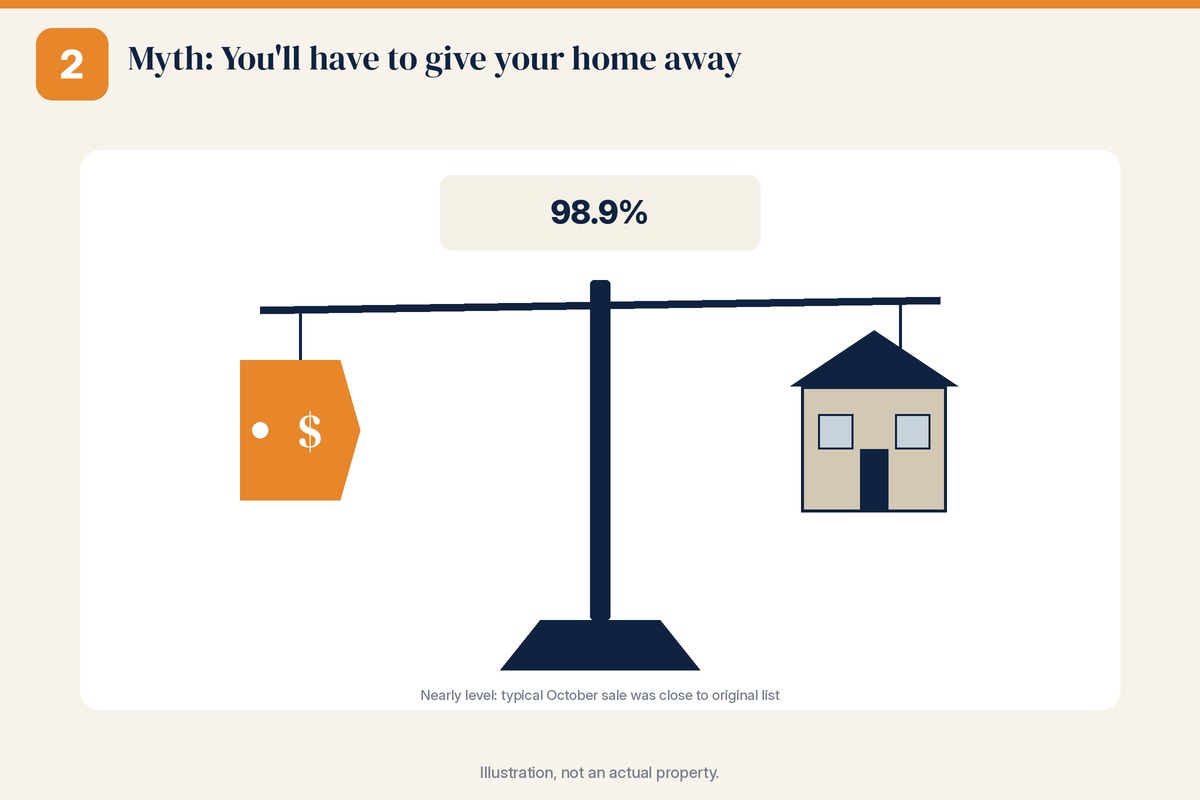
The typical October home sold for 98.9% of its original list price. Negotiation is normal. Giving it away isn't.
3. Myth: Homes just sit all winter
DOM means days on market, the number of days from listing to accepted offer. October's median DOM was 19 days, and the average was 38.4. That gap matters. The average gets pulled up by a smaller group of homes that sat a long time, while the typical home moved much faster.
Of October's closings, 45% had 14 days or fewer on market, and 60.8% had 30 or fewer. The homes that sit are usually the ones that came out of the gate with a price buyers didn't agree with. More on that next.
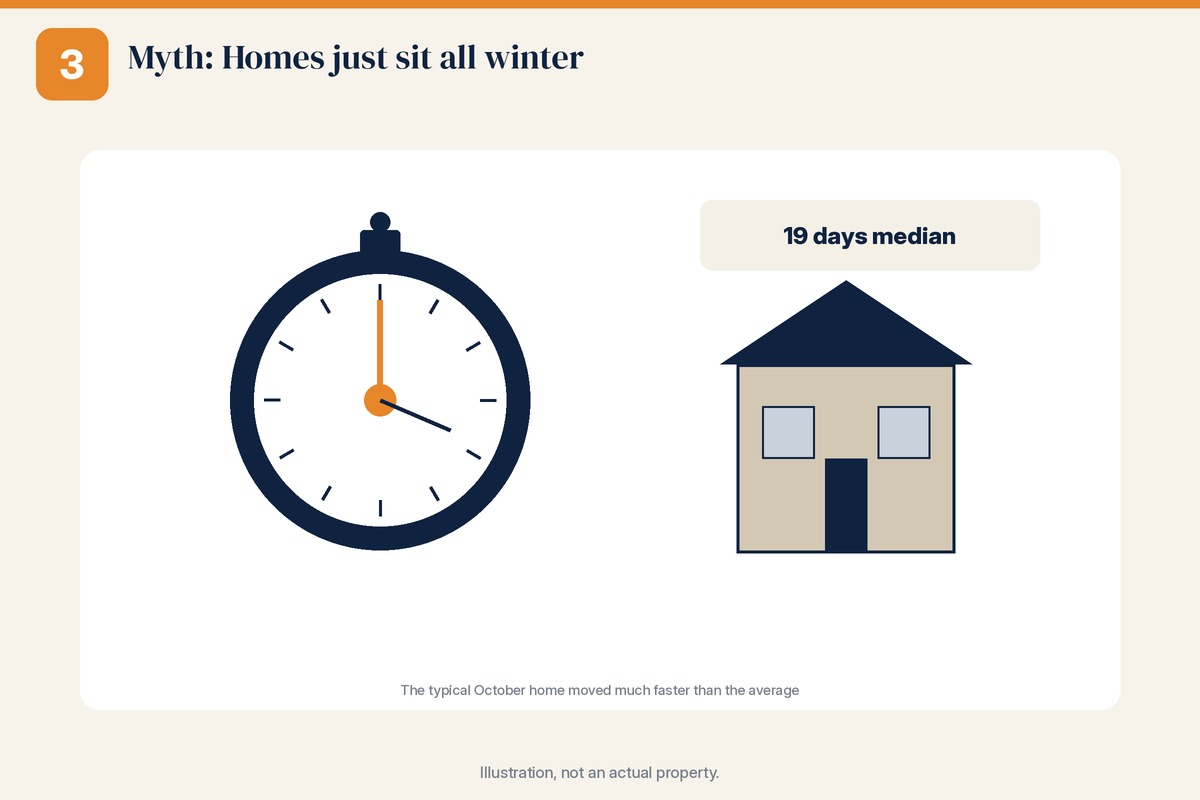
Half of October's sales had 19 days or fewer on market. Sitting all winter is the exception, not the rule.
4. Myth: Price it high, you can always come down later
I understand the thinking: start high, see what happens, and adjust. The October numbers show what that usually costs. About 36% of homes that sold had a price reduction before going under contract.
Those homes had a median of 64 days on market and sold for a median of 95.6% of their original list price. The homes that never needed a reduction had a median of 6 days on market and sold at a median of 100% of original list.
That's the difference between selling in about a week and selling in about two months, and the longer wait usually came with a lower result too. Starting high doesn't usually buy you a higher price. It mostly buys you time on the market.
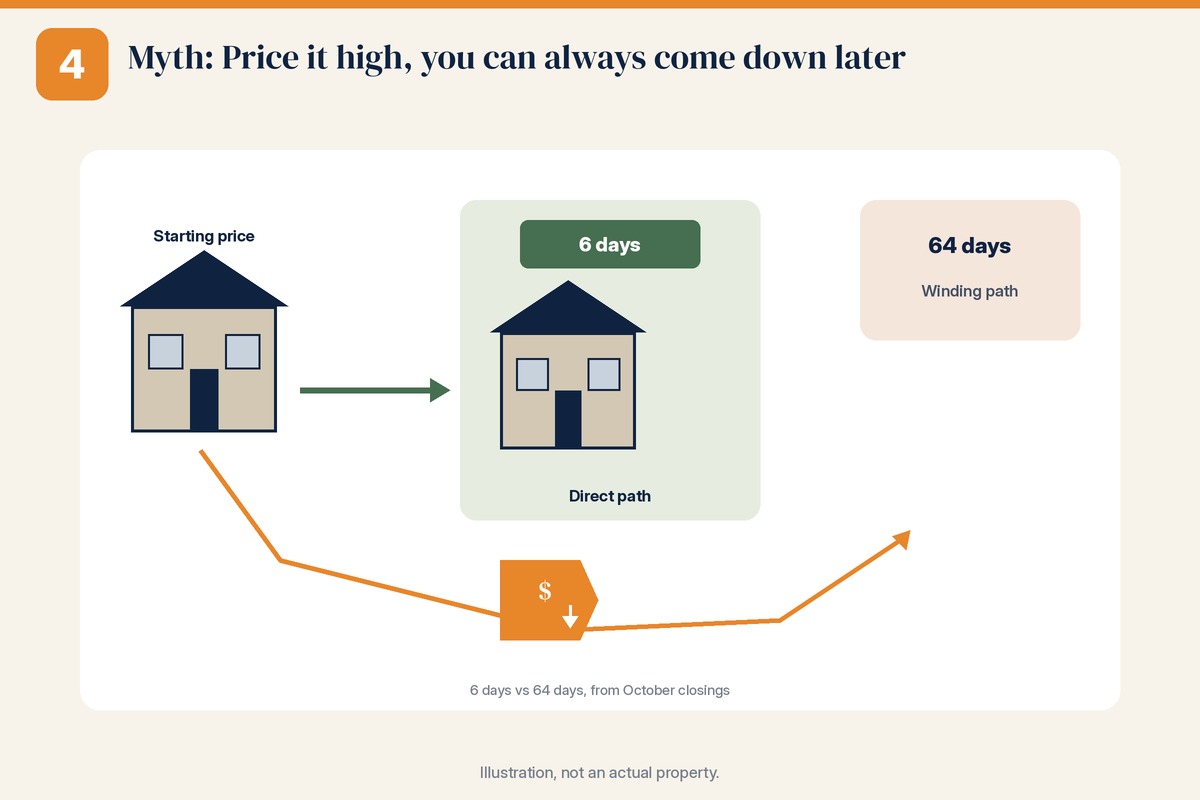
In October, homes without a price cut sold in a median of 6 days at full original price. Homes with a cut took a median of 64 days and got 95.6%.
Wondering what your number looks like right now?
If you're thinking about selling, now or in the spring, I can put together a quiet value check based on real MLS data for your area. No pressure, and no commitment.
5. Myth: There are homes for sale everywhere right now
It can feel that way scrolling online, but the count says otherwise. On November 12, there were 1,131 single-family homes active in Ada and Canyon counties, at a median list price of about $555,000.
October had 1,157 closings. Put those side by side, and that's roughly one month of supply. It's a rough snapshot, one day's listings against one month's sales, but it gives you a sense of scale.
The more telling number might be this one: 42.3% of today's active listings have already had a price cut from their original list price. To me, that doesn't say the valley is flooded with homes. It says a lot of sellers started above where buyers landed.
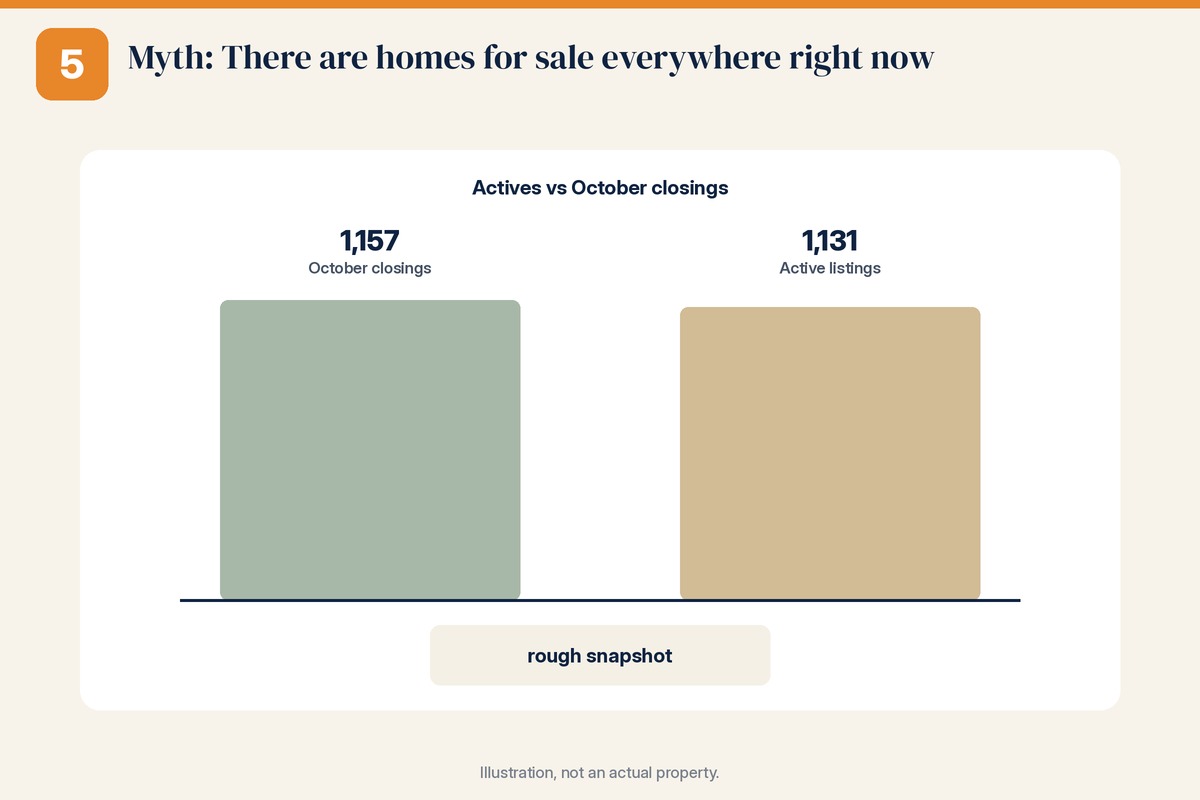
About one month of supply on a rough snapshot, but 42% of actives have already cut their price. Pricing matters more than the number of homes out there.
6. Myth: The whole valley moves at the same speed
The Treasure Valley isn't one market. In October, Ada County's median sold price was about $570,000 with an average of 35.3 days on market. Canyon County's was about $450,000, averaging 44 days.
City by city, the spread gets wider. Boise's median DOM was 12 days. Meridian's was 23, Caldwell's 22, and Middleton's 32. That's among cities with at least 20 October closings, so the numbers aren't swung by a handful of sales.
So when a neighbor says "homes are selling fast" or "homes are sitting," it really depends on where, what price range and what kind of home.
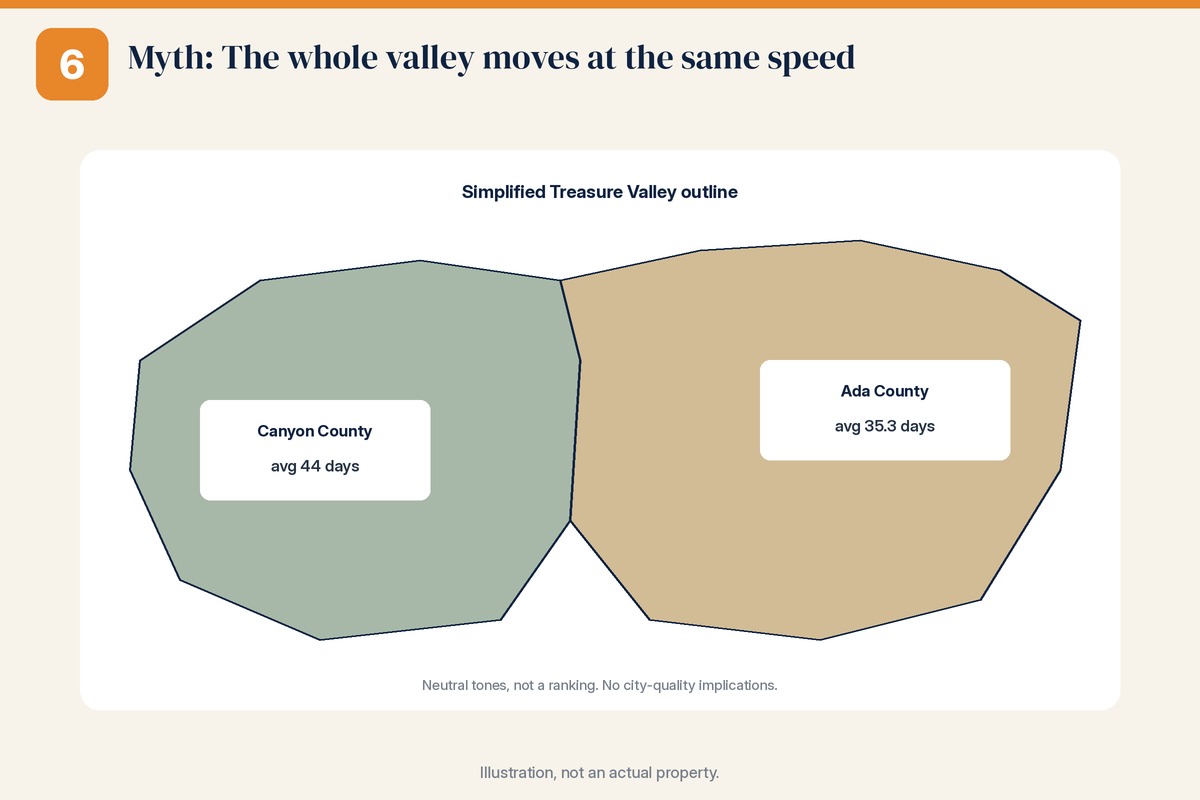
October's median DOM ranged from 12 days in Boise to 32 in Middleton. Your city and price range matter more than any valley-wide headline.
7. Myth: Spring is always the smarter time to sell
I'm not going to tell you spring isn't real. More homes usually hit the market then, and more buyers usually come out with them. What I can't tell you, from this data, is that waiting will get you a better number. October and this week's snapshot don't answer that, and I'd rather not guess.
What I can tell you is what the fall actually looked like. Buyers were active, the typical home sold close to its original price and the well-priced homes moved quickly. If spring works better for your life, that's a perfectly good reason to wait. I'd just make it a decision based on your plans and your number, not on a myth about the holidays.
The fall data shows a working market. Timing should come down to your plans and your number, not the calendar alone.
Quick recap
The holiday market is quieter, but it isn't closed. In October, 1,157 single-family homes closed in Ada and Canyon counties at a median of 98.9% of original list price. Half had 19 days or fewer on market. The homes that struggled were mostly the ones that started too high.
If you're on the fence, the most useful thing you can do isn't picking a season. It's knowing what your home would realistically sell for, today, in your part of the valley.
Curious what your home would sell for?
I'll put together a quiet value check using real MLS sales near you, so you can decide on your own timeline. Whether that's December or May, I'm happy to help when you're ready.
Get your home's valueFrequently Asked Questions
Do homes sell in the Treasure Valley in November and December?
Yes. In October 2026, 1,157 single-family homes closed in Ada and Canyon counties. As of November 12, 676 more were pending or contingent and working toward closing. The pace changes from season to season, but buyers are still writing offers.
How long does it take to sell a home in the Treasure Valley right now?
In October 2026, the median days on market for single-family homes in Ada and Canyon counties was 19, and the average was 38.4. Homes that never needed a price reduction had a median of just 6 days. Your city and price range can change that a lot.
Will I have to take a big discount if I sell over the holidays?
The October data doesn't point that way. The median home sold for 98.9% of its original list price. About 56.5% sold somewhat below original list, so negotiation is normal, but large discounts weren't typical.
How much inventory is on the market right now?
As of November 12, 2026, there were 1,131 active single-family listings in Ada and Canyon counties. Measured against October's 1,157 closings, that's roughly one month of supply, as a rough snapshot.
Should I wait until spring to sell?
That depends on your plans, your home and your area, and there's no single right answer. I'd start by getting a realistic value for your home now, then decide on timing with real numbers in front of you.
This article is general educational information based on aggregate MLS data, not legal, tax or lending advice, and not a valuation of any specific home. Past market results don't guarantee future results. Information is deemed reliable but not guaranteed.
Sources
- Intermountain MLS, Oct 2026 closed sales, Ada and Canyon counties, single-family
- Intermountain MLS active and pending listings as of Nov 12, 2026, Ada and Canyon counties, single-family