
8 Things a Standard Home Inspection Won’t Catch in the Treasure Valley
What a visual inspection can tell you, where it stops, and which follow-up checks are worth asking about.

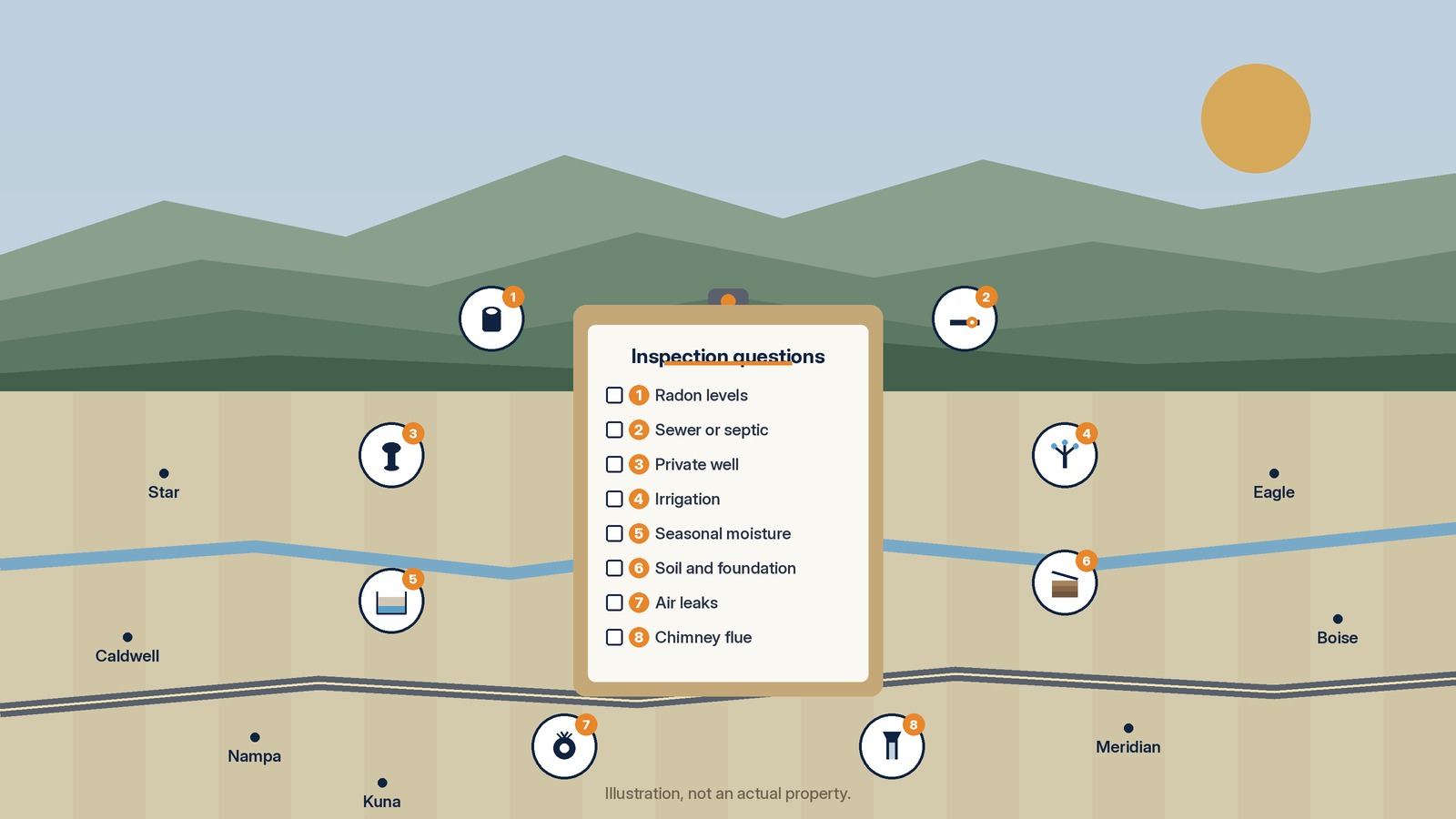
I want a home inspection to answer questions, not leave you thinking it checked things it never included. Whether you’re buying in Boise, Meridian, Nampa or Caldwell, a standard inspection is generally a visual look at accessible systems, not a test of everything behind the walls or under the yard.
The International Association of Certified Home Inspectors (InterNACHI) spells that out in its Standards of Practice. These are eight things I’d ask about separately, depending on the property. Some inspectors offer the extra checks themselves, so the first question is simply, “What’s included?”
- 01Radon levels in the air
- 02The buried sewer line or septic system
- 03Private well water quality and well performance
- 04Irrigation delivery, buried lines and account details
- 05Seasonal crawlspace water and flood exposure
- 06Soil conditions and the cause of foundation movement
- 07Air leaks and actual energy performance
- 08The inside of a chimney or flue
1. Radon levels in the air
Radon is a gas you can’t see or smell. A visual inspection won’t measure it. The Idaho Department of Health and Welfare points homeowners toward test kits or certified radon professionals.
The U.S. Environmental Protection Agency (EPA) map places Ada, Canyon, Owyhee and Payette counties in Zone 2, “Moderate potential”; Gem County in Zone 3, “Low potential”; and nearby Boise, Elmore and Valley counties in Zone 1, “Highest potential.” EPA describes Zone 2 as average indoor radon levels that may be between 2 and 4 picocuries per liter (pCi/L), Zone 3 as less than 2 pCi/L, and Zone 1 as greater than 4 pCi/L.
Those are county-level potential categories, not measurements of your home. EPA says, “All homes should be tested for radon.” I wouldn’t use a county color, a newer build or a neighbor’s result as a substitute for a test.
Who can check it: A certified radon testing professional. Ask about the testing protocol and how to interpret the result.
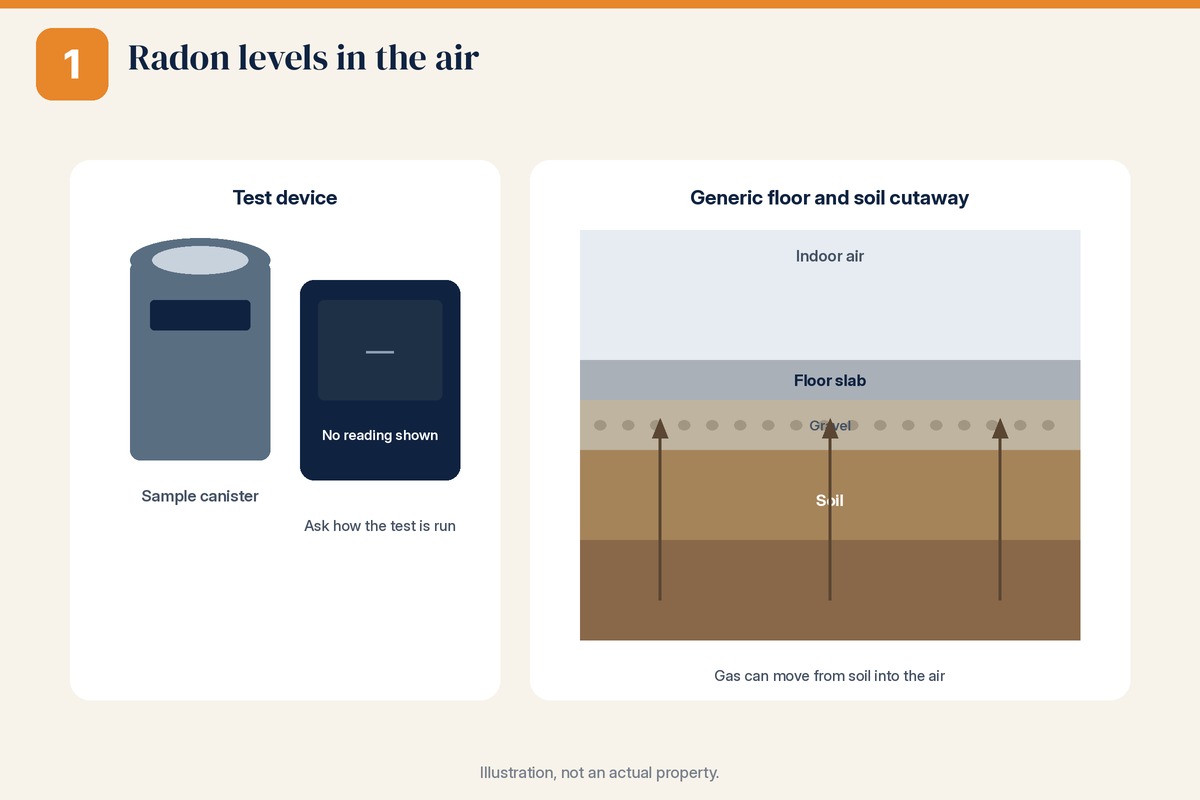
A home inspection and a radon measurement answer different questions, regardless of which county you’re in.
2. The buried sewer line or septic system
A sink draining during the inspection doesn’t show the inside of the pipe beneath the yard. A separate sewer scope uses a camera to look for visible problems such as roots, breaks or standing water in the lateral line leading away from the home.
If the home uses septic instead of public sewer, that’s a different follow-up. A camera view of the pipe doesn’t evaluate the whole tank and drainfield. Central District Health has septic records and resources for Ada, Boise, Elmore and Valley counties; for another county, start with its local public health district.
I’d first confirm which system serves the property, then ask what a specialist can inspect and what will remain inaccessible. That’s more useful than assuming “plumbing checked” means everything underground was checked too.
Who can check it: A sewer-scope professional for the lateral line; a qualified septic professional for the tank and drainfield, with records from the public health district.
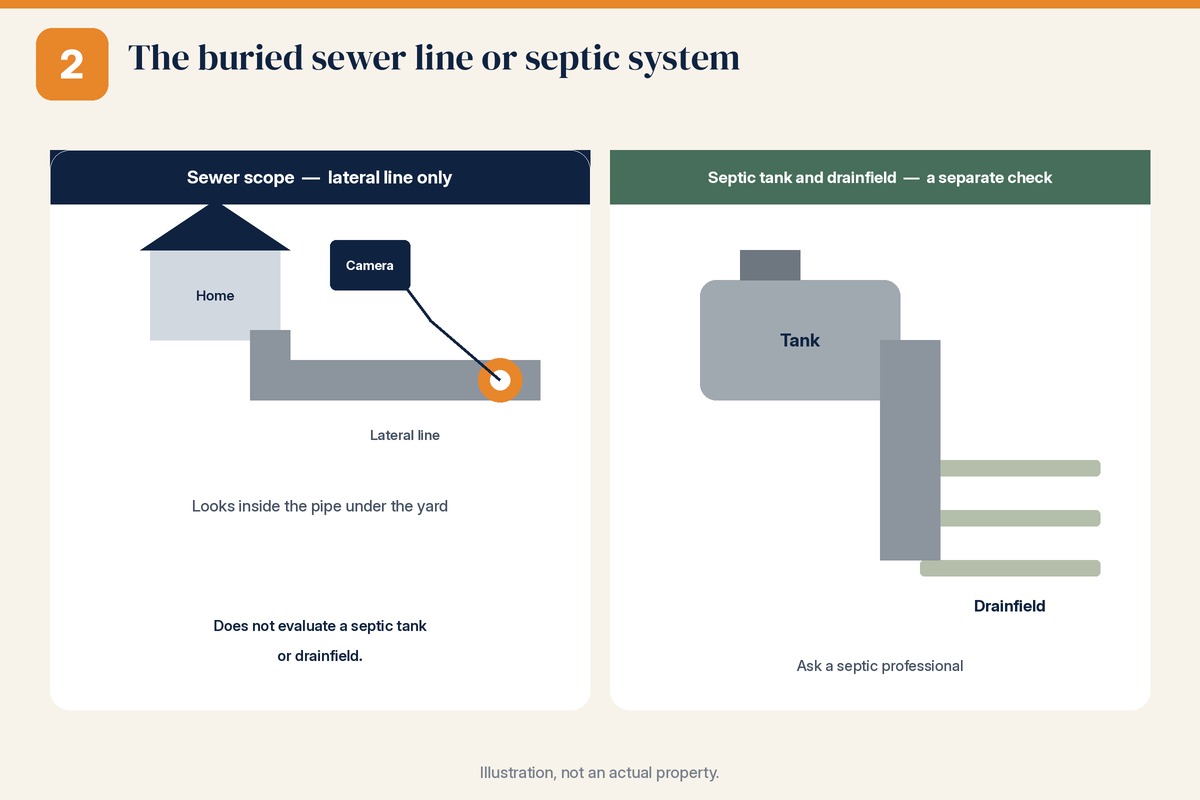
Running the fixtures isn’t the same as looking inside the buried wastewater system.
3. Private well water quality and well performance
If you’re looking at a property served by a private well around Kuna, Star, Eagle or the Caldwell area, I’d separate two questions: what’s in the water, and how is the well equipment performing? Clear water and a working faucet don’t answer both.
The Idaho Department of Environmental Quality (DEQ) recommends testing private wells for nitrate and bacteria at least annually and asking about other contaminants relevant to the area. Its guidance directs owners to Idaho-certified laboratories and the local public health district.
A general home inspection doesn’t establish water quality or the reliability of the source. Lab sampling and an equipment or production evaluation are separate conversations, and neither is replaced by a quick look at the pressure tank.
Who can check it: An Idaho-certified drinking-water laboratory for samples, the public health district for local testing guidance, and a qualified well contractor for equipment and production questions.
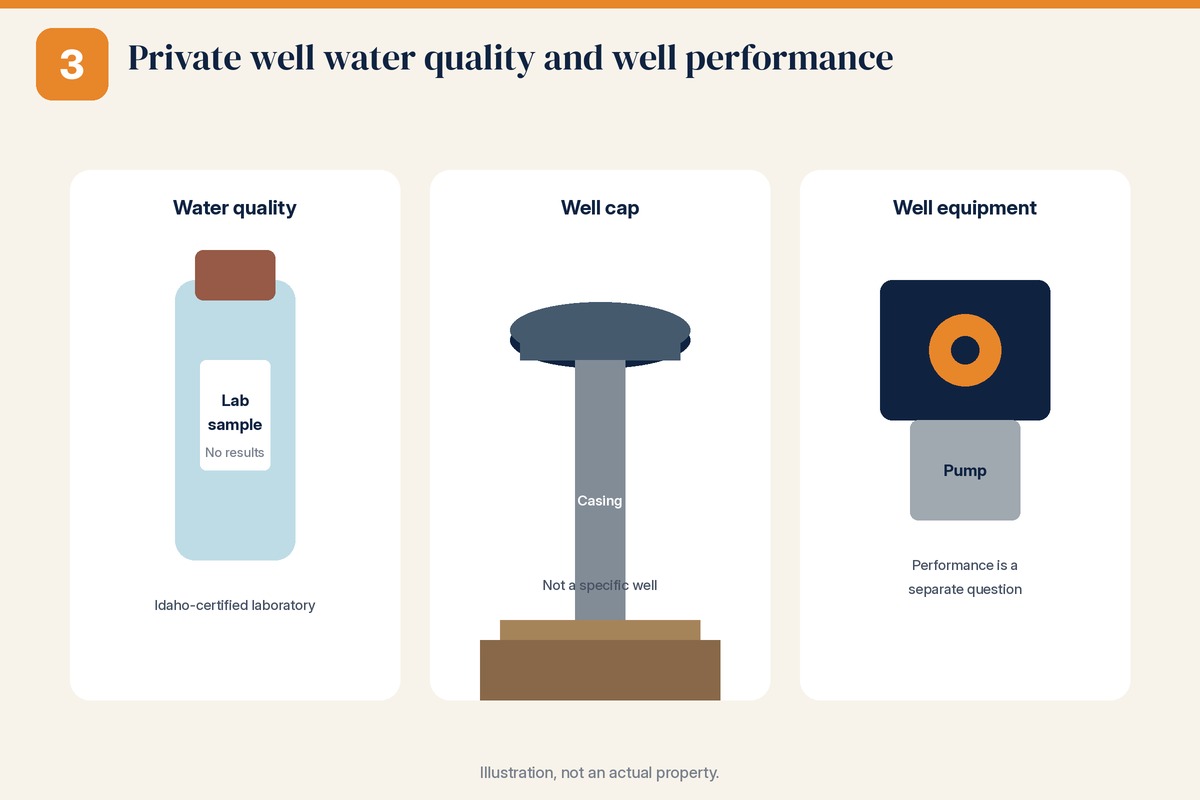
Water quality and well performance need their own checks, not just a turn of the faucet.
Looking around the valley?
I’d start with the areas that fit your everyday drive, then look at the systems each property actually uses. You can browse the map anytime, with no pressure to pick a place today.
4. Irrigation delivery, buried lines and account details
A green lawn doesn’t tell you where the irrigation water comes from, who maintains the delivery system or what the account covers. A standard inspection generally doesn’t include irrigation or buried sprinkler lines.
The Nampa & Meridian Irrigation District says its typical water season runs from mid-April to early October, depending on supply. That means an off-season visit may tell you very little about operating pressure or leaks. The district also explains that its assessment is based on the allocated water right, not water usage, and that private lawn sprinklers aren’t maintained by the district.
I’d ask the actual provider to explain service, delivery and current account information, then ask a sprinkler professional about the private system. Different districts and privately operated systems can work differently. A home inspector isn’t verifying water shares or interpreting water rights.
Who can check it: The serving irrigation district or system operator for delivery and account questions; an irrigation contractor for the private equipment. If there’s an HOA, ask it to explain any separate irrigation charge.
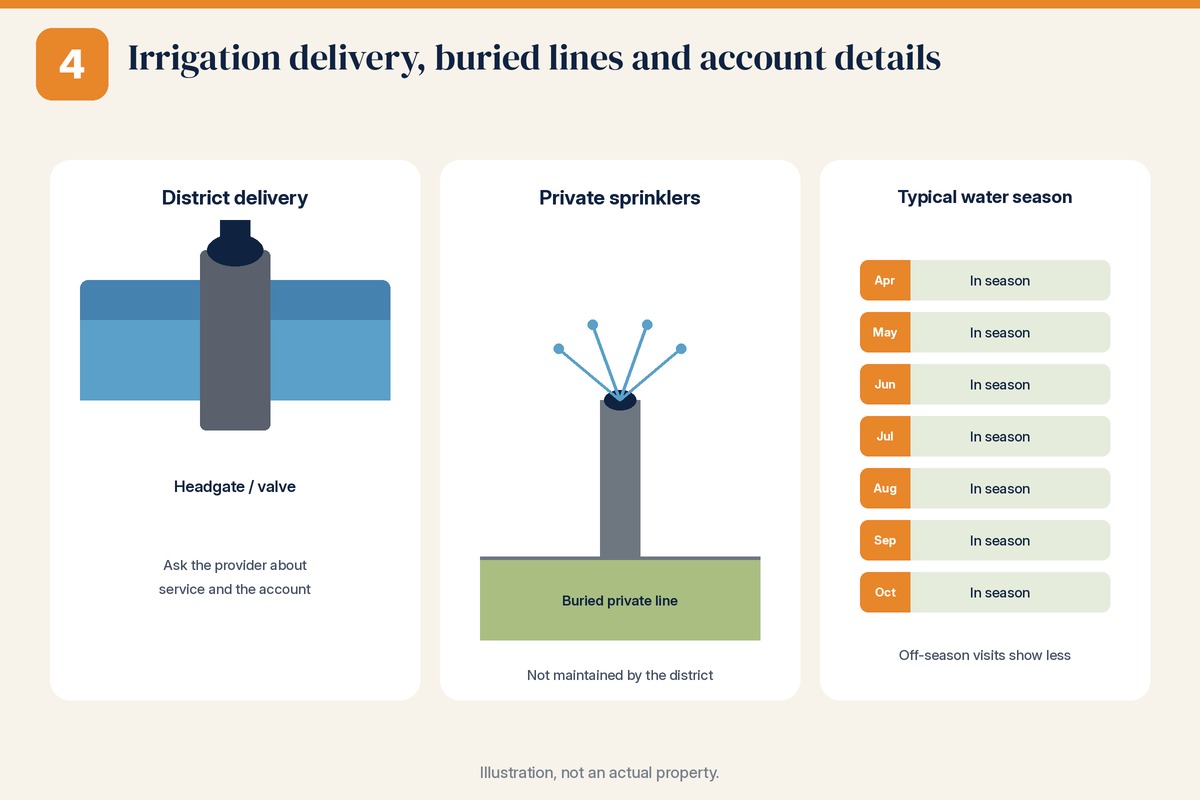
Irrigation is both a physical system and a provider conversation. One doesn’t replace the other.
5. Seasonal crawlspace water and flood exposure
Inspectors do look for visible water intrusion and drainage problems, where accessible. What they can’t do is make a dry inspection day show how the crawlspace behaves during a different season.
Ada County Emergency Management notes that a rising water table can flood a crawlspace even when outside floodwater doesn’t reach the home. That’s a useful distinction in an irrigated valley: surface flooding and groundwater aren’t the same thing.
I’d ask about past moisture, drainage work and any areas the inspector couldn’t reach. For floodplain information, the local floodplain office is a separate stop. A visual inspection isn’t a floodplain determination, and a map alone doesn’t diagnose crawlspace moisture.
Who can check it: A qualified drainage or building-moisture specialist, with an engineer if the findings call for one; the city or county floodplain office for mapped flood information.
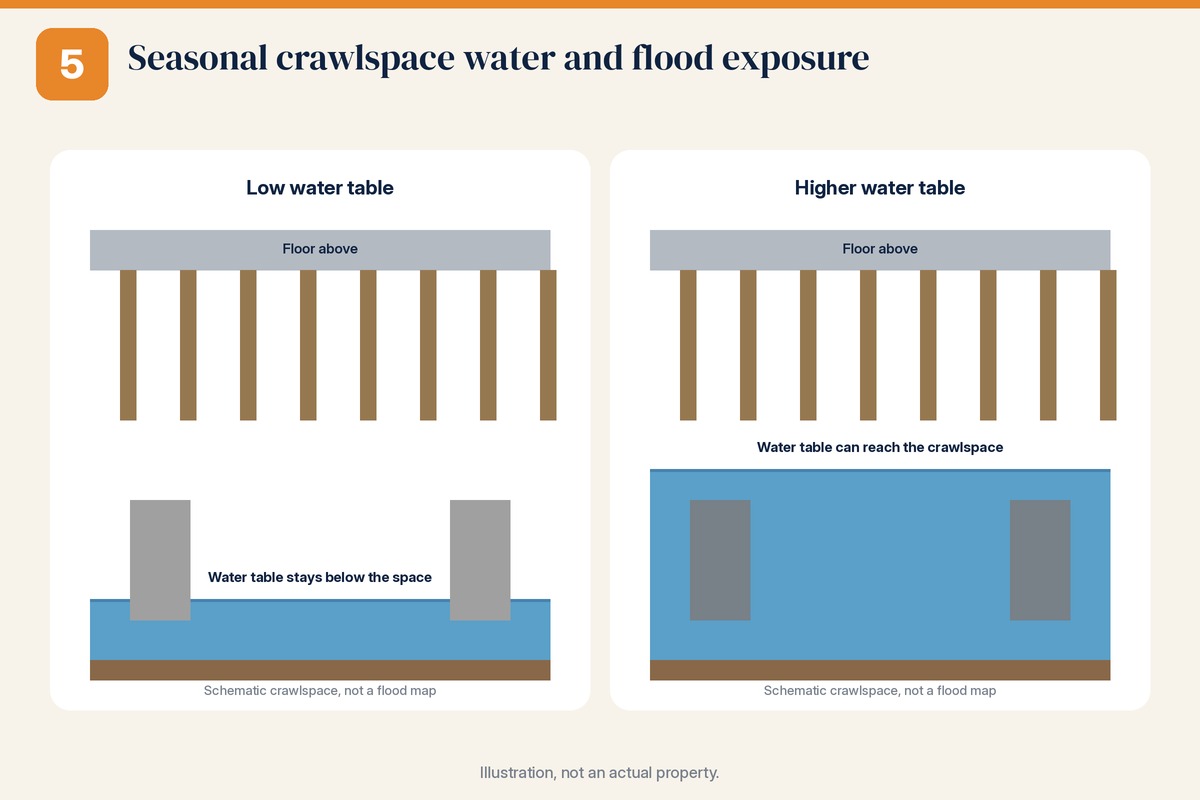
“Dry today” describes the visit. It doesn’t establish year-round conditions.
6. Soil conditions and the cause of foundation movement
A home inspector may flag cracks, uneven floors or other signs of possible movement. That isn’t the same as identifying the soil beneath the foundation, explaining the cause or deciding whether movement is continuing.
This matters on a site-by-site basis, especially when slopes or previous earthwork raise questions. The City of Boise’s geotechnical guidance treats soils evaluation for hillside construction as specialist work. That construction guidance isn’t an inspection rule for every existing home, but it shows why a general visual report isn’t a soil study.
I wouldn’t label an entire city as having “bad soil,” or diagnose a crack from a photo. If the report raises a concern, I’d want the appropriate engineer to explain what it means for that particular site.
Who can check it: A structural engineer for the building and a geotechnical engineer for soil or slope questions, depending on the findings.
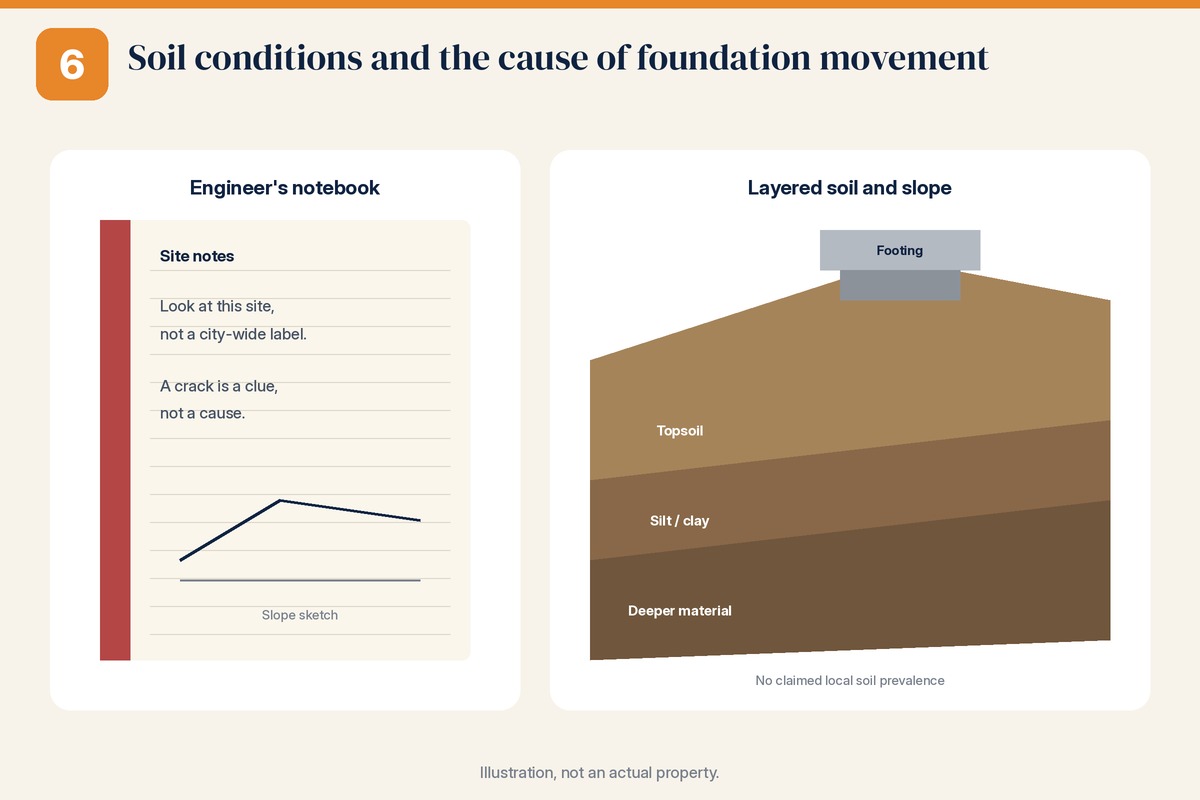
Seeing a crack and explaining its cause are different jobs.
7. Air leaks and actual energy performance
An inspector can observe accessible insulation and operate heating or cooling equipment when conditions allow. That doesn’t measure all the air escaping through the building or tell you how comfortable each room will be in January or July.
Idaho Power’s home energy audit is an example of a separate assessment. It uses a home performance specialist and, where appropriate, a blower-door test to locate air leaks. Program eligibility and testing limitations apply, so I wouldn’t assume a home you’re considering automatically qualifies.
If comfort is a concern, I’d ask about an independent energy assessment and an HVAC evaluation where needed. Utility history can provide context, but someone else’s thermostat settings and usage won’t predict your bill.
Who can check it: A qualified home performance specialist for leakage and insulation questions; an HVAC professional for equipment and air-distribution concerns.
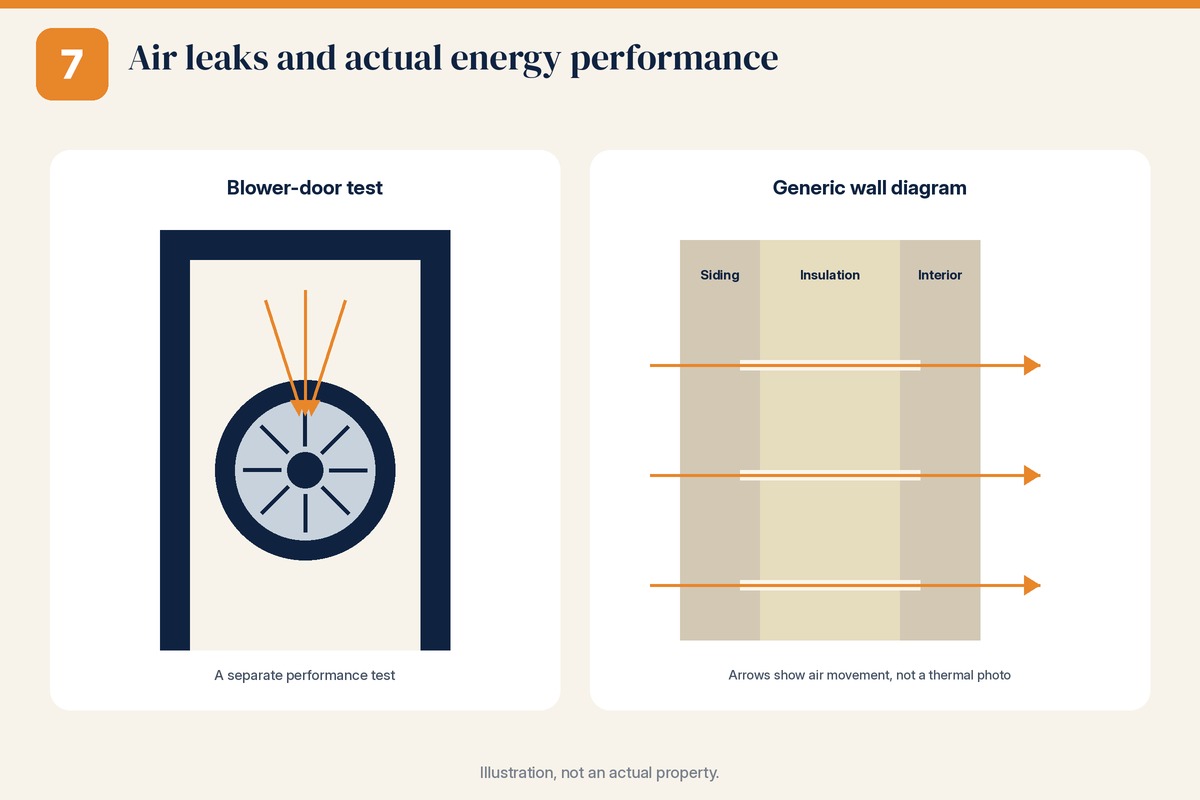
“It turns on” and “it performs efficiently” aren’t the same finding.
8. The inside of a chimney or flue
If a fireplace or wood stove is part of what you like about a Treasure Valley home, I’d ask how far the inspection goes. A look at the visible fireplace and chimney doesn’t necessarily include the inside of the flue, a camera scan or a draft test.
InterNACHI’s fireplace inspection scope covers accessible, visible portions, while excluding chimney and flue interiors and several kinds of testing. A neat hearth isn’t evidence that those hidden areas have been evaluated.
Who can check it: A qualified chimney professional who can explain the inspection level, whether an interior scan is appropriate and what remains out of view. A gas fireplace may call for a qualified appliance service professional as well.
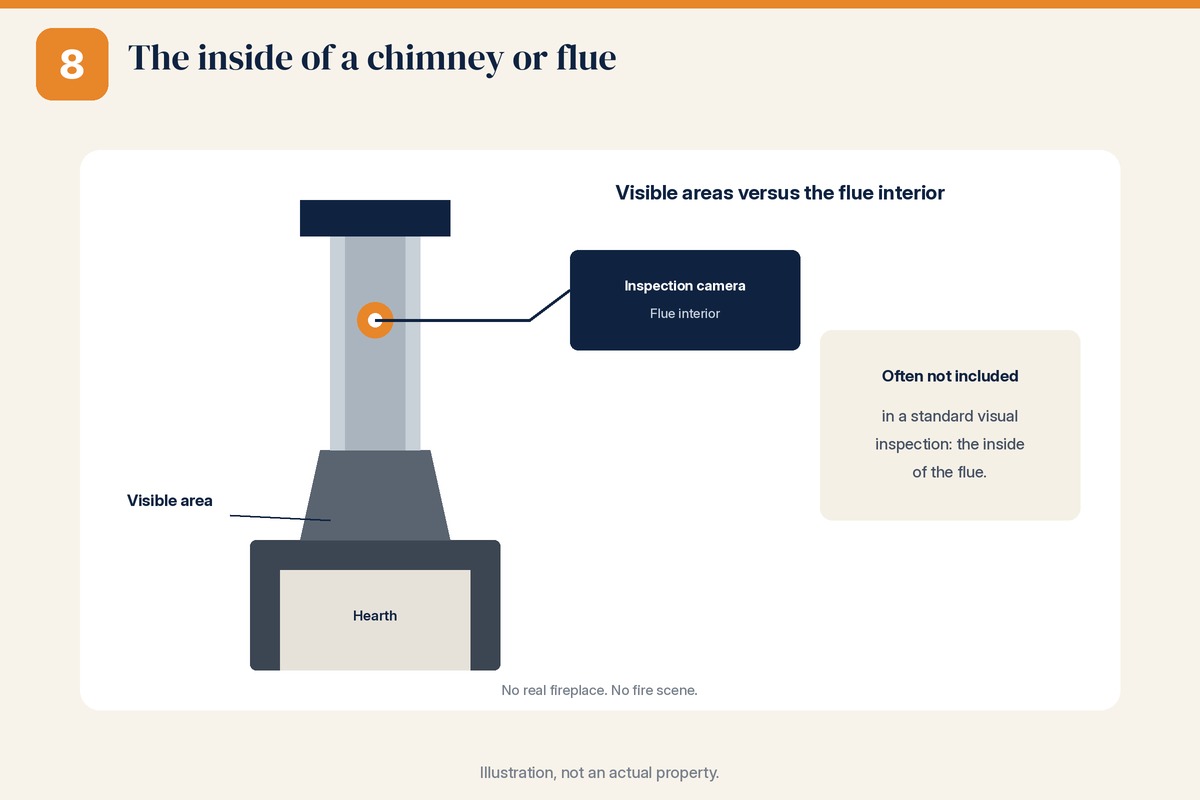
Ask what was inspected inside the chimney, not just whether the fireplace appeared in the report.
Quick recap
I don’t see these as eight extra inspections every buyer automatically needs. I see them as eight questions to match to the property: air, wastewater, well water, irrigation, seasonal moisture, soil, energy performance and chimney interiors.
Start with the general inspection’s scope and limitations. Then use the findings, the systems on site and the available records to decide which specialist conversations make sense.
Search homes on the mapReady to narrow down your search?
Use the map to compare Boise, Meridian, Nampa, Caldwell, Eagle, Star and Kuna at your own pace. Once a place catches your attention, I can help you sort the inspection questions from the questions that belong with a specialist.
Search homes on the mapFrequently Asked Questions
Does a standard home inspection include radon testing?
Not automatically. Radon measurement is outside InterNACHI’s general visual inspection scope, although an inspector may offer it as an additional service. Ask exactly what’s included before assuming a test is part of the visit.
What EPA radon zones cover Ada and Canyon counties?
Both are Zone 2, which EPA labels “Moderate potential.” That is an area-level potential category, not a radon reading for an individual home. EPA says all homes should be tested, including homes in Zone 3.
Does a sewer scope inspect a septic system too?
Not by itself. A scope looks inside the accessible lateral pipe. Evaluating a septic tank and drainfield is separate work, so ask a septic professional what that evaluation covers.
Can an inspector check a crawlspace and still miss seasonal water?
Yes. An inspector can report visible moisture and accessible drainage concerns on the visit, but a dry day doesn’t reveal every seasonal groundwater condition. Past records and follow-up with a drainage specialist can help answer questions the visual visit can’t.
Do I need all eight follow-up checks?
Not necessarily. A property on public water without a fireplace won’t raise the same questions as a well-served property with a wood stove. I’d match the follow-up to the systems present, the report’s limitations and any concerns it identifies.
Sources
Sources reviewed November 6, 2026. No market-price or days-on-market figures are used.
- International Association of Certified Home Inspectors (InterNACHI), Home Inspection Standards of Practice, revised October 2022. General visual scope, exclusions, structure, plumbing, HVAC, insulation and fireplace sections: https://www.nachi.org/sop.htm
- InterNACHI, Sewer Scope Inspection Standards of Practice. Scope, accessible lateral pipe, visible findings and limitations: https://www.nachi.org/sewer-scope-sop.htm
- U.S. Environmental Protection Agency (EPA), EPA Map of Radon Zones, updated September 16, 2026. Potential categories, all-home testing guidance and official county data downloads: https://www.epa.gov/radon/epa-map-radon-zones-0
- EPA, official Radon Zones JSON county data. County designations verified directly: https://www.epa.gov/system/files/other-files/2024-06/radon-zones-202406.json
- EPA, Idaho Map of Radon Zones (PDF). County colors and county-level predicted screening potential, not individual-home measurements: https://www.epa.gov/sites/default/files/2014-08/documents/idaho.pdf
- Idaho Department of Health and Welfare, What is Radon? Testing options and certified professional directories: https://healthandwelfare.idaho.gov/health-wellness/environmental-health/what-radon
- Central District Health, Septic, Subdivisions & Water. District coverage, septic resources and private-well testing guidance: https://cdh.idaho.gov/licenses-permits-inspections/water-septic-subdivisions/
- Idaho Department of Environmental Quality, Wells. Private-well testing, certified laboratories and well-contractor guidance: https://www.deq.idaho.gov/water-quality/groundwater/wells/
- Nampa & Meridian Irrigation District, Frequently Asked Questions. Seasonal service, assessments, provider roles and private sprinklers: https://nmid.org/about-nmid/frequently-asked-questions/
- Ada County Emergency Management, Residential Flooding (PDF). Groundwater and crawlspace flooding: https://adacounty.id.gov/emergencymanagement/wp-content/uploads/sites/39/flooding-residential.pdf
- City of Boise, Geotechnical Evaluation Guidance (PDF). Specialist soils evaluations for hillside projects: https://www.cityofboise.org/media/18382/geotechnical-evaluation-guidance.pdf
- Idaho Power, Home Energy Audit. Home performance assessments, blower-door testing and eligibility limitations: https://www.idahopower.com/savings-rebates/savings-for-your-home/home-energy-audit/
This article is general educational information, not a property diagnosis or legal, tax, lending or engineering advice. Inspection scope varies by provider and the agreed service. No inspection or specialist evaluation guarantees future conditions. Information is deemed reliable but not guaranteed.